No Room Left to Scream: How America's Cities Are Bulldozing Their Own Underground Scenes
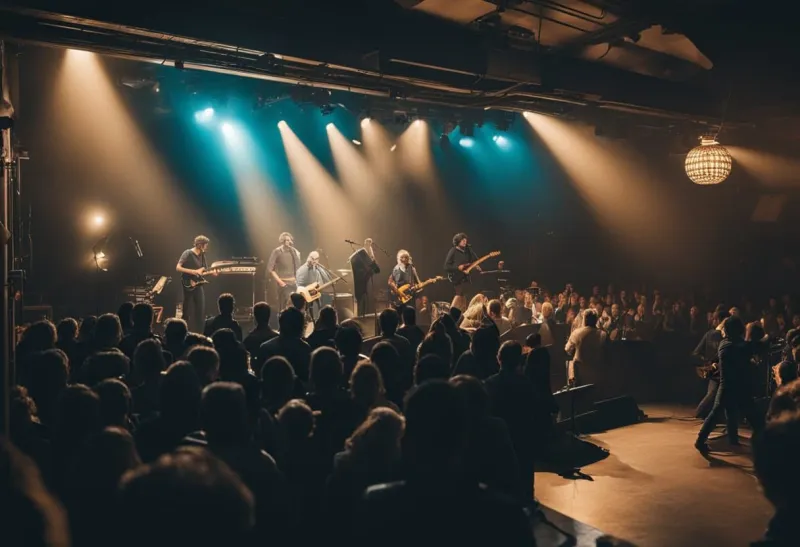
Photo: dark crowded DIY basement concert underground music venue, via www.connollycove.com
In 2016, a fire tore through a warehouse called Ghost Ship in Oakland and killed 36 people at a DIY music event. The tragedy was devastating, and the regulatory crackdown that followed was arguably inevitable. But what happened next across American cities wasn't just increased safety enforcement — it was a systematic purge. Landlords who'd tolerated informal venue use for years suddenly got spooked. Zoning boards got aggressive. And one by one, the weird, rough-edged, beautiful spaces that had incubated underground music for decades started disappearing.
That crackdown was years ago. The disappearing hasn't stopped.
The Geography of Underground Music Is Collapsing
Here's the economic reality: DIY venues — basement spaces, converted warehouses, back-room galleries, rented storefronts — have always operated in the margins. They survive in neighborhoods where rents are low enough that a promoter running the door at a $10 show can cover the cost of the space, pay the bands something, and maybe break even. They exist in the cracks.
Gentrification fills in the cracks.
In city after city, the neighborhoods that historically housed underground scenes have been transformed by rising property values, luxury development, and the arrival of residents who did not move to a formerly industrial neighborhood in order to hear a hardcore band at 11pm on a Tuesday. Complaints follow. Noise ordinances tighten. Landlords sell or renovate. The spaces evaporate.
Los Angeles has lost dozens of warehouse and loft venues over the past decade. Chicago's Logan Square, once dense with DIY spaces, has been almost entirely gentrified out of affordability. In New York, the transformation of Brooklyn pushed underground music further and further from the center until many scenes simply scattered. Austin — Austin, Texas, the city that branded itself on live music — has watched its venue ecosystem buckle under the weight of the tech industry migration that's driven median rents into the stratosphere.
This isn't a local problem. It's a national one.
What DIY Spaces Actually Do
Let's talk about what gets lost when these venues close, because it's not just about having a place to see bands.
DIY spaces are where artists play their first shows before they have a booking agent or a press kit or a single. They're where scenes form — where a noise artist and a rapper and a post-punk band and a poet end up on the same bill and figure out they have more in common than they thought. They're where local subcultures develop their own aesthetics, politics, and identities outside the influence of major labels or mainstream tastemakers.
The Replacements came out of Minneapolis basement shows. Fugazi built their ethos playing DC spaces with intentionally low ticket prices. The entire Pacific Northwest grunge explosion had roots in the kind of all-ages DIY infrastructure that made music accessible to kids who couldn't get into bars. Virtually every significant alternative movement in American music history has a DIY venue origin story.
When those spaces disappear, the pipeline breaks. Artists who would have spent two years playing rough basement gigs, developing their sound and building a local following, now have nowhere to do that work. The jump from "bedroom producer" to "ready for a real venue" becomes a leap with no bridge.
Profiles in Resistance
Not everyone is going quietly.
In Philadelphia, a collective called Space1026 has been operating as a nonprofit artist community since 1998, using its nonprofit status as partial insulation against the market pressures that have killed commercial DIY spaces around it. It's still there. Still hosting shows. Still functioning as proof that alternative organizational models can survive.
In Richmond, Virginia, a scrappy network of house venues has maintained a rotating ecosystem — when one space closes, another opens, sustained by a community that's made a collective decision to keep the infrastructure alive. It's precarious and it requires constant effort, but it works.
In Detroit, where decades of depopulation left enormous amounts of cheap commercial space, a DIY scene took root and flourished in a way that simply couldn't happen in a high-demand market. The irony is brutal: the economic devastation that made Detroit affordable also made it generative. As the city's fortunes improve, that affordability is already beginning to erode.
Some venues have gotten political. Groups like the National Independent Venue Association (NIVA), which formed during the COVID shutdowns to fight for federal relief, have begun building the kind of advocacy infrastructure that DIY spaces have historically avoided out of an allergy to institutional engagement. The threat has become serious enough that even the most fiercely independent operators are learning to work the system.
The All-Ages Access Problem
There's a dimension to this crisis that doesn't get enough attention: the destruction of DIY spaces hits young people hardest.
Bar venues require patrons to be 21. Larger clubs often skew the same way for practical and liability reasons. DIY spaces — basements, galleries, lofts — were historically where under-21 audiences could actually participate in live music culture. When those spaces close, teenagers and young adults in their early twenties get locked out of the live music ecosystem almost entirely.
The cultural consequence of that is hard to overstate. The most formative music experiences tend to happen young. If the only affordable, accessible spaces for young people to encounter underground music are online, you end up with a generation whose relationship to alternative culture is mediated entirely through screens — which is exactly the algorithmic flattening that the best underground scenes have always pushed against.
So Where Does the Underground Go?
The honest answer is: we don't fully know yet, and that uncertainty is part of what makes this moment feel so urgent.
Some of the energy has moved online — Discord servers, Bandcamp pages, Twitch streams. These aren't nothing. But they don't replicate the physical experience of being in a room with a band and fifty other people, feeling something collectively, talking to strangers who love the same weird thing you love. That experience is irreplaceable and it requires physical space.
The cities that figure out how to protect and support DIY venue ecosystems — through zoning protections, affordable arts space programs, nonprofit models, or just getting out of the way — will be the cities that continue to produce culturally significant music. The ones that don't will be left with expensive concert halls, corporate festival brands, and the faint memory of when something real used to happen there.
The underground doesn't need much. It never did. It just needs somewhere to exist.
Right now, that somewhere is getting harder and harder to find.