No Middleman, No Masters: How Underground Artists Are Hacking Their Own Financial Rails
You survived the algorithm. You escaped the label system. You figured out how to press vinyl without going broke and sell merch without a manager taking thirty percent. And then, one Tuesday morning, Stripe freezes your account because some automated system flagged your band name as "suspicious," and three weeks of tour revenue disappears into a dispute queue you have no real way to fight.
Welcome to the last frontier of corporate gatekeeping: payment processing.
For all the noise about streaming royalties and Ticketmaster monopolies, the payment processor problem is the one that rarely gets talked about in public. But ask any working indie artist who runs their own operation — their own Bandcamp-adjacent storefront, their own merch setup, their own direct fan subscription — and they'll have a story. An account frozen. A payout delayed for weeks. A transaction flagged because a customer used a VPN. A band with a name that tripped some content moderation wire designed for an entirely different context.
The underground noticed. And it started building.
The Freeze-Out Is Real
Stripe and PayPal aren't villains in the comic book sense. They're just corporations optimizing for low risk and high compliance, which means their automated systems are tuned to protect them — not you. When those systems misfire, and they do constantly, the burden of proof falls entirely on the account holder. You're guilty until proven innocent, and the appeals process is a labyrinth designed to exhaust you into giving up.
For artists operating in genres that touch anything edgy — extreme metal, transgressive hip-hop, explicitly political punk, noise, industrial — the problem compounds. Content flags don't just catch illegal stuff. They catch uncomfortable stuff. And what counts as uncomfortable shifts depending on which bank is underwriting Stripe's operations that month.
Jamila Osei, who runs a small experimental electronics label out of Atlanta, got hit twice in eighteen months. First, her PayPal account was limited after a spike in international transactions from a European tour run. Second, Stripe froze a new account she'd opened after processing a presale for a limited vinyl run. "Both times, the money was just... held," she says. "No clear timeline, no human being to talk to. Just automated emails telling me to submit documents I'd already submitted."
She spent those weeks personally messaging every customer to explain the delay, eating the embarrassment and the refund requests. "That's when I started actually researching alternatives. Not because I'm some crypto libertarian. Because I got tired of begging a robot for my own money."
The DIY Financial Stack
What's emerging from artists like Osei isn't a single solution. It's a patchwork — a DIY financial stack assembled from parts that didn't necessarily exist five years ago.
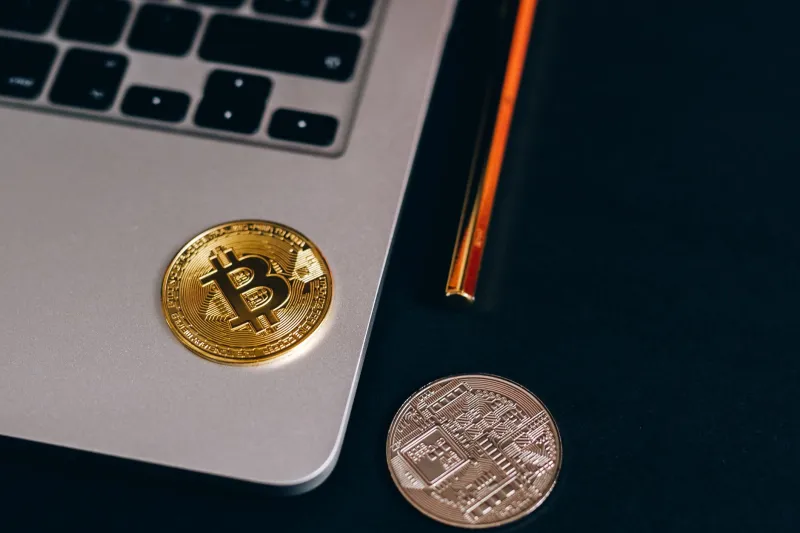
Crypto is part of it, but not in the "get rich on memecoins" sense that the mainstream press loves to mock. Artists are accepting Bitcoin and Ethereum as direct payment options, cutting out processors entirely for fans who are already in that ecosystem. More practically, stablecoins — crypto assets pegged to the dollar — let artists receive international payments without the volatility risk that scared off most of the indie world during the 2017-era hype cycle.
Blockchain-native music platforms are another piece. Platforms like Catalog and Sound.xyz were initially positioned around NFTs, and yeah, that framing aged poorly in the broader culture. But strip away the speculative nonsense and what those platforms actually built was direct artist-to-fan financial infrastructure that doesn't route through Stripe at all. Artists who stuck around after the NFT bubble deflated found themselves with functional storefronts and payment rails that nobody could freeze.
Then there's the decidedly less glamorous option: direct bank integrations. Services like Dwolla, and in some cases direct ACH setups negotiated through regional credit unions, let artists accept payments that land straight in a bank account without a payment processor sitting in the middle. It's more setup work. It's less plug-and-play. But it's also significantly harder for an automated compliance system to shut down on a Tuesday with no explanation.
The Co-op Model Makes a Comeback
Some corners of the underground are going even further, reviving structures that predate the internet entirely. Artist-run financial cooperatives — essentially, shared banking infrastructure owned by the artists who use it — are getting a second look from DIY labels that have watched enough solo accounts get frozen to recognize the pattern.
The logic is straightforward. A co-op with fifty member labels and a combined annual revenue in the low seven figures is a meaningfully different customer to a bank than a single artist doing $40k a year. It has negotiating leverage. It can establish direct relationships with actual human beings at financial institutions. It can build the kind of institutional track record that makes automated fraud systems less likely to fire.
Marcus Delray, who co-runs a collective of underground hip-hop labels based across Chicago and Detroit, has been piloting exactly this model for the past year. "We pooled our operational accounts into a single co-op structure, worked with a local credit union that actually wanted our business, and started processing everything through that," he explains. "Have we had zero problems? No. But when there's a problem, I call a person. That alone is worth more than I can explain."
This Isn't About Ideology, It's About Survival
It's worth being clear about something: the artists building these alternatives aren't doing it because they read a Bitcoin whitepaper and got radicalized. Most of them couldn't care less about the philosophical debates around decentralized finance. They're doing it because the existing system keeps failing them in concrete, material ways, and they've run out of patience waiting for Stripe to fix its algorithm.
That's actually the more interesting story. The underground has always been pragmatic. It builds what it needs when the mainstream infrastructure won't serve it. DIY recording because studios were inaccessible. DIY distribution because labels wouldn't sign them. DIY venues because cities kept shutting down the spaces. Now: DIY payment rails because the processors keep treating them like liabilities instead of customers.
The tools are rougher than Stripe's onboarding flow. The setup takes longer. Some fans won't bother to figure out how to pay with a crypto wallet, and that's real money left on the table. Nobody's pretending this is frictionless.
But friction has always been the underground's native environment. The artists who thrive in it have never expected the path to be smooth. They've just expected to control where it goes.
The Leverage Is Coming
Here's what the payment processors should probably be paying attention to: the underground's experiments tend to scale. Bandcamp looked like a niche curiosity before it became the indie standard. Cassette culture looked like nostalgia before it became a genuine revenue stream. The DIY financial stack being assembled right now by artists in Atlanta and Chicago and Detroit and a dozen other cities looks messy and marginal today.
Give it five years. The artists building it aren't going to stop needing to get paid. And they're not going to stop remembering who froze their account on a Tuesday with no explanation and no human being to call.
The middlemen had their shot. The underground is building the exit.