Static and Subversion: The Late-Night Pirate Broadcasters Keeping Censored Music Alive
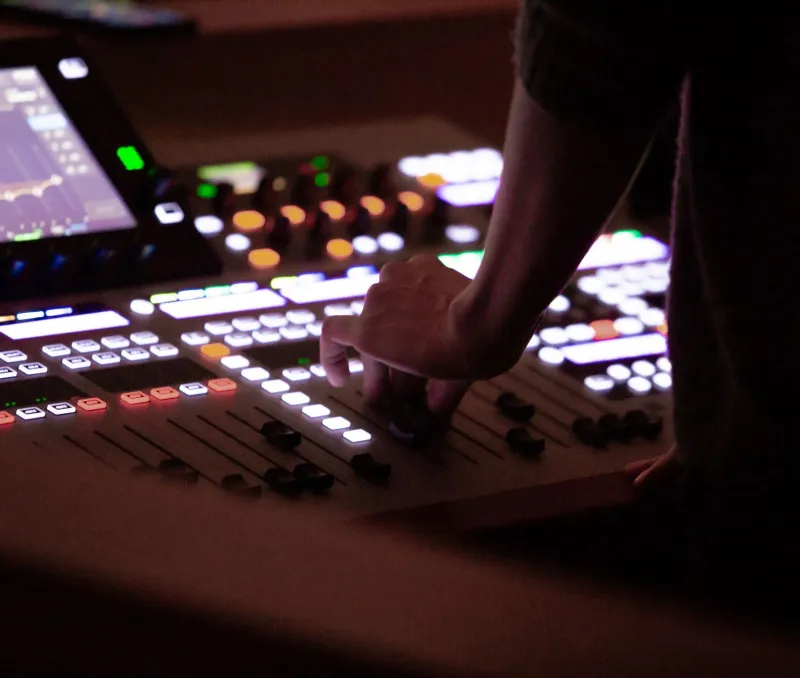
It's 1:47 a.m. on a Tuesday somewhere in the Pacific Northwest, and a DJ who goes only by the handle Carrier Wave is doing something technically illegal. From a converted utility closet stacked floor-to-ceiling with salvaged broadcast equipment, he's pushing signal out into the dark — no license, no FCC blessing, no corporate oversight. What he's playing? A two-hour set of tracks that have been quietly scrubbed from Spotify, shadowbanned on SoundCloud, or flagged into algorithmic oblivion by rights-management bots serving labels that haven't released new music worth a damn in years.
"If the platforms won't carry it, the air will," he tells ALT1000 over an encrypted voice call, his location deliberately obscured. "Radio doesn't need your login. It doesn't need your data. It just needs you to be awake and listening."
This is the new pirate radio — and it looks nothing like the romanticized offshore broadcasters of the 1960s or the scrappy FM outlaws of the '80s. It's more distributed, more technically sophisticated, and operating with a clarity of political purpose that makes your average streaming playlist feel like a press release.
The Censorship Nobody's Talking About
Here's the thing corporate music media doesn't want to frame too loudly: platform censorship of music is real, it's happening constantly, and it's almost never announced. It doesn't look like a government ban. It looks like a track that never surfaces in search results. It looks like an artist whose follower count mysteriously stalls. It looks like a song that exists on a platform but generates zero algorithmic recommendations — not because nobody likes it, but because somewhere upstream, a content moderation system or a rights dispute or an advertiser's sensitivity review quietly buried it.
The artists affected aren't just fringe provocateurs. Underground hip-hop producers sampling obscure soul records, noise artists whose work trips automated content ID systems, Palestinian and protest musicians whose content gets flagged under vague "community guidelines" — all of them are finding their work functionally invisible on the platforms that were supposed to democratize music distribution.
"I had a track taken down seventeen times in six months," says Chicago-based producer Mira Solís, whose dense, politically charged electronic work has earned her a devoted underground following. "Not because of copyright. Because of a lyric. One lyric that apparently made an automated system nervous. So I stopped trying to fight the bots and started working with broadcasters who don't answer to them."
Solís is now a regular feature on at least three unlicensed late-night shows — one shortwave, two FM — whose operators she found through what she describes as "the old way: word of mouth, trust, and a burner email."
Encrypted Frequencies and Mesh Networks
What separates today's pirate operators from their predecessors isn't just attitude — it's infrastructure. The current generation of underground broadcasters has absorbed lessons from activist networks, open-source tech communities, and even amateur radio culture to build systems that are genuinely difficult to trace and disrupt.
Mesh networking — where signal hops between multiple low-power transmitters rather than broadcasting from a single identifiable point — is increasingly common among urban pirate operations. It's harder to triangulate, harder to shut down, and almost impossible to kill with a single enforcement action. Some operators are running hybrid models: a shortwave signal carries the audio backbone while an encrypted internet stream, accessible only through invitation-shared links, handles the overflow audience.
DJ Phantom Limb, who operates a rotating late-night show out of somewhere in the Mid-Atlantic region, describes his setup with obvious pride and deliberate vagueness. "We've got redundancy built into everything. If one node goes dark, the show doesn't stop. It just reroutes. The FCC can find one transmitter. They can't find a network."
He's not wrong that the FCC is paying attention. Enforcement actions against unlicensed FM broadcasters have continued steadily through the 2020s, with fines running into the tens of thousands of dollars for repeat offenders. But the agency's resources are finite, and the geography of pirate radio — spread across dozens of cities, often operating only a few nights a week — makes systematic crackdown logistically brutal.
The Speakeasy Logic
There's a reason the speakeasy comparison keeps surfacing when you talk to people in this world. The original speakeasies weren't just about alcohol — they were about a community choosing to exist outside a legal framework it had collectively decided was illegitimate. Pirate radio in 2025 carries a similar energy: not lawlessness for its own sake, but a principled refusal to accept that the only legal pathways are also the ones controlled by the same handful of companies that have systematically strip-mined music culture for profit.
"Spotify and Apple Music aren't neutral infrastructure," says Carrier Wave. "They're editorial systems with corporate interests baked into every recommendation. The FCC isn't neutral either — licensing favors consolidation, always has. So when you ask me why I broadcast without a license, I'd flip it: why would I ask permission from a system designed to keep music like this from being heard?"
The shows themselves have a distinctly community feel that streaming simply cannot replicate. Listeners gather in Discord servers and encrypted group chats to share what they're hearing in real time. Artists call in. Requests get taken — not through an app, but through a phone number that changes weekly. There are inside jokes that run across months of programming. There is, in short, a culture forming around these broadcasts that feels genuinely alive in a way that an algorithmically curated playlist fundamentally cannot.
What's at Stake
It would be easy to romanticize all of this into something cleaner than it is. Pirate radio operators are breaking the law, and not every unlicensed broadcaster is doing it out of noble principle — some are just chaotic, some are running interference for genuinely harmful content, and the lack of accountability cuts both ways. The scene is not without its contradictions.
But the underlying cultural argument these broadcasters are making is hard to dismiss. When the legal, licensed, officially approved pathways for music distribution are controlled by a shrinking number of massive corporations — when those corporations have both the power and the financial incentive to decide what gets heard and what disappears — then the act of broadcasting without permission starts to look less like crime and more like correction.
Mira Solís puts it plainly: "I'm not trying to be a criminal. I'm trying to be heard. Those two things shouldn't be in conflict. The fact that they are tells you everything about whose interests the system actually serves."
Somewhere out there tonight, on a frequency you'll have to find the old-fashioned way, the signal is still going out. Static and all. Especially static and all.
Know an underground broadcaster we should talk to? Hit us through the usual channels. You know how to find us.