Mirror, Mirror, Mine: How Underground Artists Are Weaponizing Deepfakes to Steal Themselves Back
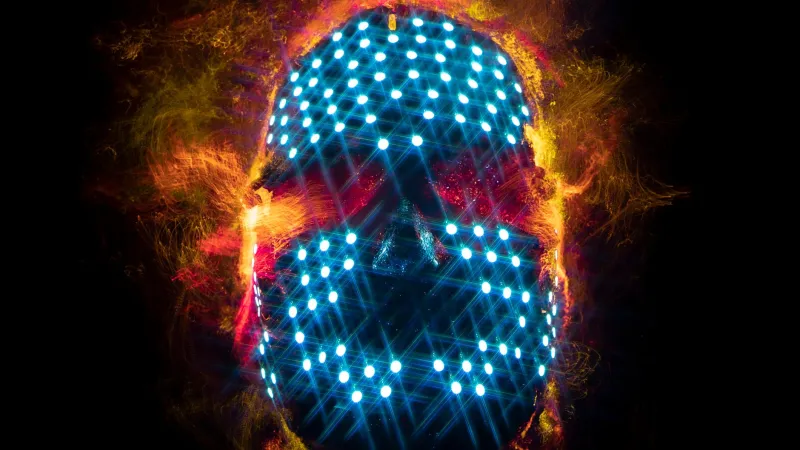
There's a version of Mara Vex performing on a screen somewhere in a Brooklyn loft right now. She's wearing the jacket she wore at her first headline show. She's singing a song the label shelved three years ago. She looks exactly like herself — because it is her, kind of. Except Mara Vex made this version herself, in a basement, using open-source AI tools she learned from a Discord server. The label doesn't get a cut. They don't even know it exists.
"They own the masters. They own the promo shots. They technically have a clause in my old contract about likeness rights," she says, laughing with the specific exhaustion of someone who's read too many entertainment lawyers' emails. "So I made a me that they can't touch."
This is the new frontier of underground artistic resistance — and it's weirder, more legally murky, and more philosophically interesting than anything happening in a courtroom right now.
The Corporate Hostage Situation Nobody Talks About
Most conversations about deepfakes in the music industry center on the nightmare scenario: fake Drake songs, AI-generated vocal clones flooding streaming platforms, dead artists resurrected without consent. That framing is real, and the concerns are legitimate. But it completely ignores the inverse situation — the one where living artists have already lost meaningful control over their own image, voice, and likeness to the very contracts that were supposed to launch their careers.
Major label deals, particularly the 360 deals that became standard in the 2010s, can hand over shockingly broad rights. We're talking image rights, voice likeness, performance footage, even the right to create "simulated performances" of an artist using their existing catalog. Read the fine print on enough of those contracts and you start to understand why some artists feel less like creative professionals and more like IP portfolios walking around in human skin.
For underground artists who got a taste of the major label system before escaping — or getting dropped — those contractual ghosts don't always disappear. Some find themselves unable to use their own stage names. Others discover that promo photos they posed for are still being licensed years after the relationship soured. And a few are finding out that their voice, their face, their brand, still technically belong to someone else.
Enter the synthetic self.
Building Your Own Double
The tools have gotten democratically accessible in ways that would've seemed science fiction five years ago. Open-source voice cloning software. Freely available video synthesis models. Communities on Reddit and Discord sharing workflows that used to require Hollywood-level compute budgets. An artist with a decent GPU, some patience, and a willingness to experiment can now generate convincing synthetic versions of themselves — their voice, their face, their performance style — without asking anyone's permission.
For a subset of underground artists, this isn't a gimmick. It's a survival strategy.
Take the case of a Philadelphia-based experimental producer who goes by Sable Circuit. After a brief and disastrous stint with a mid-size label imprint, he found himself locked out of releasing music under his established name while a dispute dragged through arbitration. So he started releasing music "performed" by a synthetic version of himself — same voice, same aesthetic, technically a different entity. "Is it me? Sure. Can they prove it? That's the fun part," he says.
He's careful not to claim it's a legal solution. "I'm not a lawyer and this isn't advice. But I'm also not going to sit on music for two years while they figure out if they want to bother enforcing something."
The Philosophy of the Synthetic Self
Beyond the legal chess match, something more interesting is happening at the philosophical level. A growing number of artists aren't just using deepfakes reactively — they're building entire conceptual frameworks around synthetic self-replication as an artistic statement.
The argument goes something like this: if a corporation can own the rights to your image, your voice, your performance, then the "you" that exists in their filing cabinet is already a constructed artifact. It's not the real you — it's a legally defined version of you, stripped of agency and repurposed for revenue extraction. Creating your own synthetic double is, in this reading, an act of reclamation. You're not faking yourself. You're making a version of yourself that you control, for the first time maybe ever.
Visual artist and musician Dessa Crane — no relation to the Minneapolis rapper — has been developing this framework publicly through a series of performance pieces she calls "Authorized Fakes." She generates deepfake versions of herself performing songs she was never able to release commercially, then screens them at underground venues and house shows. "The fake me has more freedom than the real me," she told a crowd at a Chicago warehouse show last fall. "Make of that what you will."
The Legal Gray Zone Is the Point
Let's be honest about what's happening legally: this stuff lives in genuinely uncharted territory. Existing case law on likeness rights, right of publicity statutes, and AI-generated content is a patchwork at best. The federal landscape is even spottier — there's no unified national right of publicity law in the US, which means protections and liabilities vary wildly state to state.
What's clear is that the major entertainment industry players are watching, lobbying, and pushing for legislation that would tighten their grip. The NO FAKES Act, which has been circulating in various forms in Congress, would create a federal right of publicity specifically targeting AI-generated likenesses — and critics argue it's written in a way that would benefit established industry players far more than independent artists.
For underground artists, the clock may be ticking. The window where synthetic self-replication exists in legal ambiguity might close, and when it does, the terms will almost certainly be written by people who don't have a basement show on their calendar.
Resistance as Practice
What's striking about talking to artists in this space is how little they frame this as a tech story. For them, it's the same conversation the underground has been having for decades — about who owns culture, who profits from creativity, and what tools are available to people who refuse to accept the terms being offered.
Sampling got litigated into near-irrelevance. Mixtape culture got crushed and then co-opted. Streaming promised democratization and delivered algorithmic control. Every time a new tool emerged that genuinely shifted power toward artists, the industry found a way to absorb or neutralize it.
Deepfake self-replication might be different, or it might not. But right now, in this moment, there are artists using it to perform songs they're not supposed to perform, release music they're not supposed to release, and inhabit versions of themselves that no contract can fully contain.
Mara Vex is already working on her second synthetic performance piece. She's not sure where it's going legally. She's not sure it matters.
"They spent years telling me my image was their asset," she says. "Cool. I made a new one."